
EU browser choice rules send millions more users Firefox’s way
The EU's Digital Markets Act (DMA) has been kind to Mozilla, which says Firefox use is on the up as Europeans are given a choice of default browser on mobile. Through these browser selection screens, the company reckons 6 million users have opted for Firefox instead...

eBay rejects GameStop’s offer, calling it ‘neither credible nor attractive’
The reaction may set in motion a hostile takeover attempt from GameStop.
Claude Mythos Finds Only One Curl Vulnerability; Experts Divided on What It Really Means
Curl’s lead developer says Mythos claims are marketing, but many in the industry believe the results stem from Curl’s robust security. The post Claude Mythos Finds Only One Curl Vulnerability; Experts Divided on What It Really Means appeared first on SecurityWeek.
The laser weapons race enters its industrial era
This article is republished with permission from Laser Wars, a newsletter about military laser weapons and other futuristic defense technology. On April 30, the Financial Times reported Israel had sent a version of its 100 KW Iron Beam high-energy laser weapon to the...
This (Pseudo) Random Number Generator Does It With Neon
The quest for true randomness has roots in cryptography and is a rabbit hole that gets surprisingly deep with alarmingly rapidity. Still, the generation of random-enough numbers is a popular hacker project. Part of the appeal is the way these devices strive to...
EU to crack down on TikTok, Instagram’s ‘addictive design’ targeting kids
Article URL: https://www.cnbc.com/2026/05/12/tiktok-instagram-social-media-addictive-eu-crack-down.html Comments URL: https://news.ycombinator.com/item?id=48106534 Points: 5 # Comments: 1
Japanese Retailers’ Switch 2 Sales Restrictions Favor Resellers
Some retailers are limiting sales to existing customers with higher spending histories, prioritizing scalpers over everyday buyers.
Inside the secret TikTok library that turns viral songs into brand soundtracks
If you’re a sports fan on TikTok, you’ve almost certainly heard the song “Orla” by the British DJ and producer Nimino. Since its release in early March, the song has soundtracked nearly 150,000 videos on the platform. For Nimino, that doesn’t just mean more exposure...
Is The SOC Obsolete, And We Just Haven’t Admitted It Yet?
Many AI-first enterprises have already embraced sovereign architectures for general AI initiatives; cybersecurity—and the SOC—should be next. The post Is The SOC Obsolete, And We Just Haven’t Admitted It Yet? appeared first on SecurityWeek.
Microsoft makes Copilot easier to summon, harder to ignore in Office
Microsoft is "streamlining" access to Copilot within its productivity applications and updating the keyboard shortcut to activate the assistant. "We heard from many of you that you're unsure how to start engaging with Copilot," the company says, though it did not...
11 ways to signal AI fluency on your résumé
Standing out in today’s job market requires more than listing AI tools on a résumé. It demands proof of real-world application and measurable results. So how can professionals signal genuine AI fluency on their résumés or LinkedIn profiles? Industry experts reveal...

The Steve Jobs $1 coin goes on sale today starting at $61 for a roll
It features the Apple co-founder with the California landscape in the background.
Coursera and Udemy are now one company
Coursera and Udemy are now one company Go to Source Article URL: https://blog.coursera.org/coursera-and-udemy-are-now-one-company-creating-the-worlds-most-comprehensive-skills-platform/ Comments URL:...
Yabasic (Yet Another Basic)
Article URL: https://en.wikipedia.org/wiki/Yabasic Comments URL: https://news.ycombinator.com/item?id=48106345 Points: 3 # Comments: 0
Why Agentic AI Is Security’s Next Blind Spot
Agentic AI is already running in production environments across many organizations today. It is executing tasks, consuming data, and taking actions — most likely without meaningful involvement from the security team. The industry conversation has largely framed this...
Windows update prompt joins the Post Office queue
BORK!BORK!BORK! "Let's cross this one off your list" are words to strike fear into the hearts of many a Windows user, particularly when they appear on some Post Office digital signage. Spotted by an eagle-eyed Register reader in East Dulwich, London, the screen is one...
TanStack, Mistral AI, UiPath Hit in Fresh Supply Chain Attack
Over 400 malicious versions of 170 packages were published as part of the new Mini Shai-Hulud campaign. The post TanStack, Mistral AI, UiPath Hit in Fresh Supply Chain Attack appeared first on SecurityWeek.
AI and the Future of Work The Hidden Cost of C-Suite Silence
There is a quiet shift happening in boardrooms right now in how companies are approaching AI and the future of work. It is not loud like a downturn or dramatic like a crash. There are no single headlines that fully capture it. Instead, it is something more subtle and...
People Were Never Told How AI Works, And That’s a Problem
By the end of this article, you will realize there was still something about using AI that was never clearly explained to you. Most people do not use AI badly because they are careless. They use it badly because the interface lies a little. Not intentionally. Not...
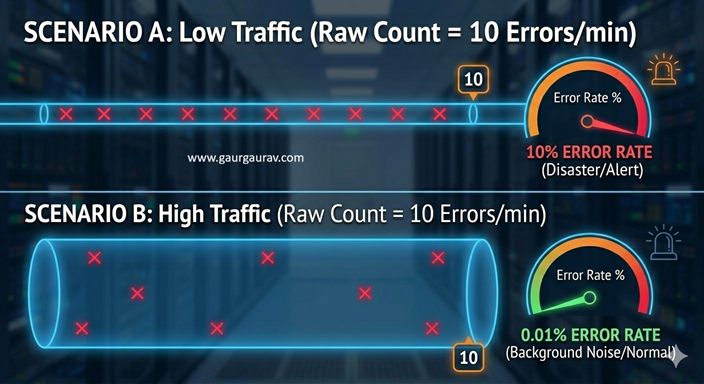
Why Errors and Saturation Matter More Than You Think – Part 2
A practical guide In the first part, I covered the two initial signals to diagnose that something is wrong: Latency Traffic Those two alone explain a surprising number of production incidents. But they don’t explain everything. Rising latency tells you a problem is...
Why Large-Scale Data Systems Break Quietly
In a previous post, I described an architecture that processes millions of records per hour using Python, Kafka, PySpark, and Kubernetes. The system scales well. But scalability is rarely the first thing that breaks. In practice, large-scale data systems usually fail...
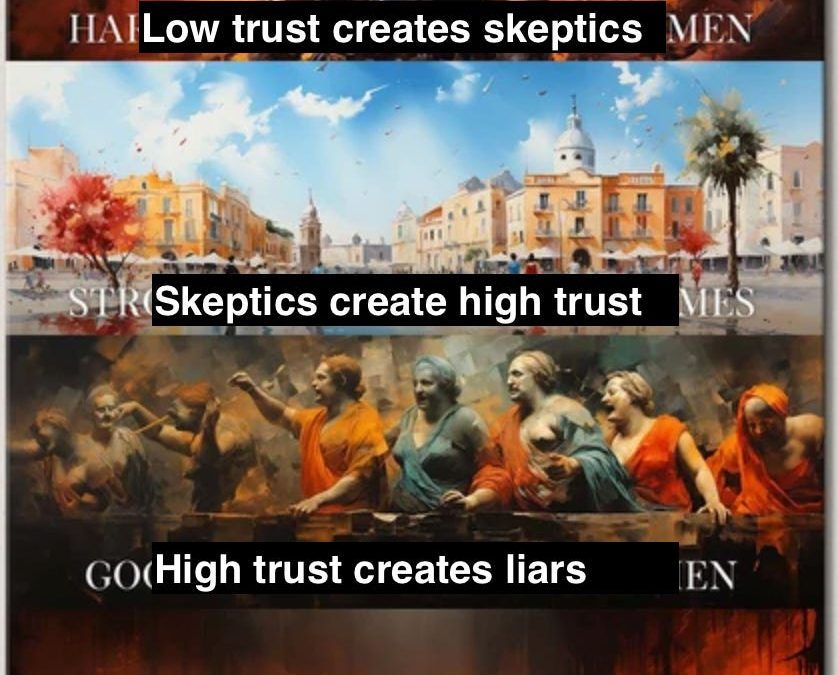
Why Status, Money, and Trust All Run on the Same Code
This essay was sparked by Max Meursault’s piece on The Game Theory of Social Trust. Short, sharp and worth reading first. The cycle he maps: In trying to answer the questions he raised, I went further upstream. What actually generates the trust in the first place? In...
Small Language Models Have a Trillion-Dollar Future
Small Language Models have a Trillion-Dollar Future Picture two parallel realities. In the first, a fintech startup’s engineering team watches their monthly OpenAI bill climb past $80,000, each API call adding another invisible decimal to a cost structure that is...
I Wrapped ClamAV for Node.js So You Don’t Have To
File upload endpoints are a standard attack surface. The fix — scanning uploads before accepting them — is well understood in theory and largely ignored in practice. The reason is friction. ClamAV, the de facto open-source antivirus engine, does not have a clean...
Your AI Coding Assistant is Lying to You – Here’s the Proof
AI coding tools feel like productivity boosters, but multiple studies suggest experienced developers may actually work slower, introduce more bugs, and unknowingly trust hallucinated outputs. The speed gain is often psychological: AI accelerates writing code, while...
The Narrative Trade: When the Story Becomes the Only Asset Left
Once the truth gets quietly engineered out of the data — and we’ve spent four parts showing exactly how that happens — what’s left isn’t an asset class. It’s a story. And the story is all anyone is actually trading.
The Only Context Rule Your AI Agents Actually Need
Refresh Often. Keep It Minimal. Don’t Learn From It. We keep making the same mistake with AI agents: we stuff them with more context, longer memory, bigger windows… and then act surprised when they get slower, weirder, and wildly expensive. Refresh your context often....
291 Blog Posts To Learn About Neural Networks
Let's learn about Neural Networks via these 291 free blog posts. They are ordered by HackerNoon reader engagement data. Visit the Learn Repo or LearnRepo.com to find the most read blog posts about any technology. The crux of deep learning algorithms. Neural networks...
The Illusion Of Sovereignty And The Architecture Of Seizure
In conclusion, the management of geopolitical risk is the management of state aggression. You must view every sovereign entity as a predatory actor. You must view every bank as an agent of that actor. You must build your own private, decentralized, and mathematically...
I Reverse-Engineered My Apple Watch to See If My Rehab VO2 Max Was Real
After a severe ankle injury, I investigated whether the Apple Watch's VO2 Max estimates are reliable enough to track my recovery. The device uses sophisticated neural networks and "prediction deltas" to extrapolate elite fitness levels from simple brisk walks. Recent...